eSIM Technology and Virtual Phone Numbers: The Future of Mobile Identity
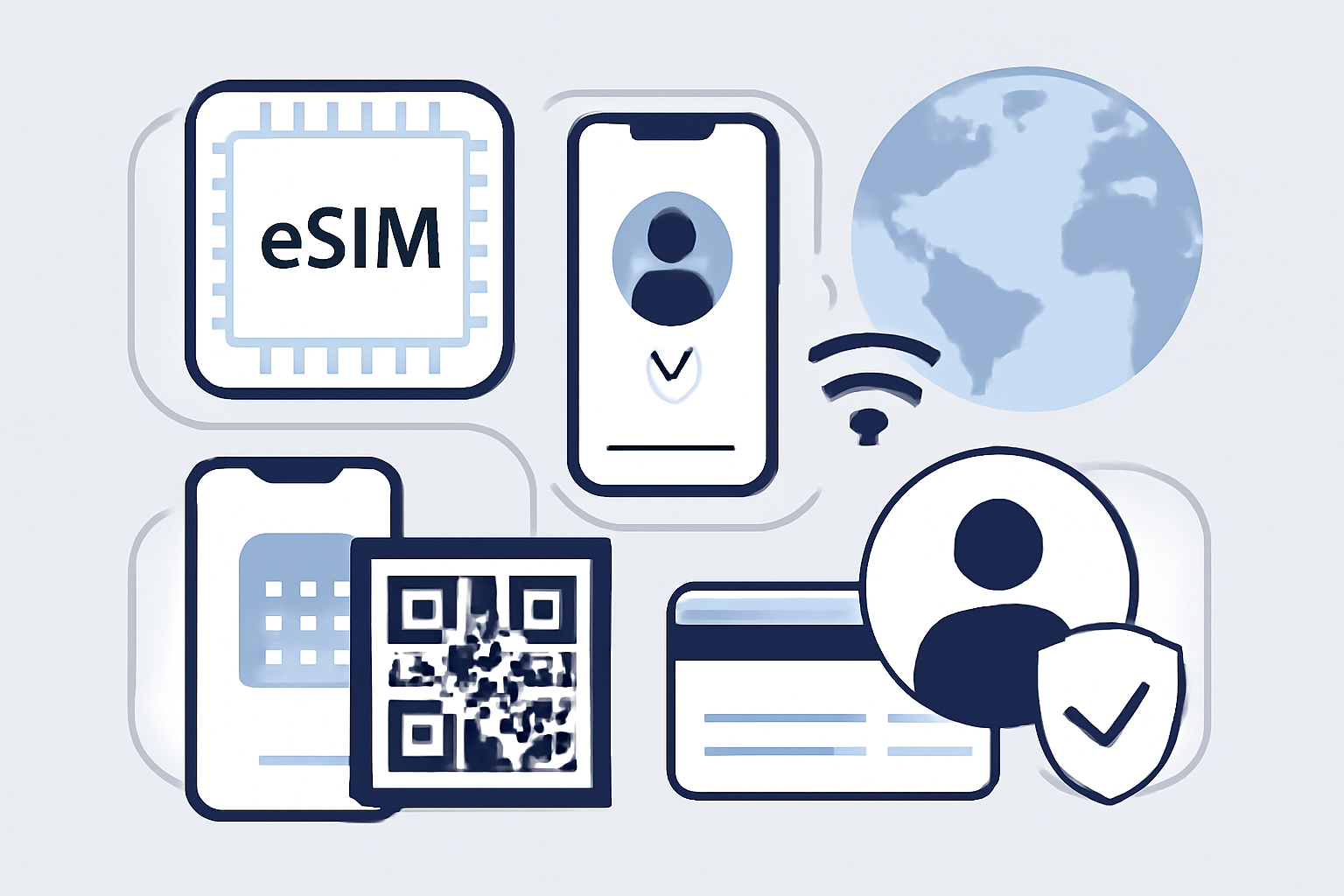
eSIM technology fundamentally changes mobile connectivity by replacing physical SIM cards with embedded chips programmed remotely via QR code scanning. Combined with virtual phone numbers, eSIMs enable instant carrier switching, multi-device identity management, and privacy-focused communication without hardware constraints. This convergence of barcode scanning technology and telecommunications infrastructure marks one of the biggest shifts in mobile identity since cellular networks went digital.
What is eSIM Technology and How It Works
An eSIM (embedded SIM) is a chip soldered directly into your device’s motherboard, programmable with carrier credentials through standardized protocols defined by the GSMA. Unlike removable SIM cards, eSIMs use remote SIM provisioning (RSP) to download operator profiles digitally.
The activation process relies entirely on QR code scanning technology. Your carrier generates a QR code containing an SM-DP+ address (Subscription Manager Data Preparation server) and activation credentials. When you scan this code with your device camera, it connects to the SM-DP+ server, authenticates using the embedded identifier (EID), and downloads the encrypted profile directly to the eSIM chip. This process follows GSMA SGP.22 specifications for consumer devices.
The technical architecture involves three key components: the eUICC (embedded Universal Integrated Circuit Card) hardware chip, the LPA (Local Profile Assistant) software on your device, and the remote provisioning platform managed by carriers. The eUICC can store multiple profiles simultaneously—typically 5-10 depending on chip capacity—though only one can be active at a time for cellular connectivity.
QR code’s error correction capability and structured data encoding make this work from a barcode perspective. Activation codes use alphanumeric mode to encode URLs and authentication tokens efficiently, with Level M error correction (15% damage tolerance) to ensure reliable scanning even from screens or printed materials. The typical eSIM activation QR contains 150-200 characters of data.
Virtual Phone Numbers vs Traditional SIM Cards
Virtual phone numbers exist entirely in cloud infrastructure, routing calls and SMS through VoIP protocols rather than traditional cellular networks. A physical SIM connects you to one carrier’s network infrastructure; a virtual number is software-defined, tied to your account credentials rather than hardware.
Physical SIM cards (including eSIMs) provide network access and cellular connectivity. Virtual numbers provide telephone identity and reachability. You can have a virtual number that rings through data connections—WiFi, 4G, 5G—without caring which carrier provides the pipe. This separation of identity from infrastructure changes how we think about mobile communications.
Traditional SIM limitations become obvious in comparison. Need a second number for business? Buy another phone or swap SIMs constantly. Traveling internationally? Pay roaming fees or buy local SIMs at every destination. Want privacy when selling items online? Hand out your permanent personal number. Virtual numbers solve all three scenarios through software provisioning.
The technology stack differs completely. Physical SIMs authenticate to cellular towers using K keys and IMSI identifiers burned into the card during manufacturing. Virtual numbers authenticate to application servers using standard web protocols—OAuth tokens, API keys, session credentials. One operates at the cellular network layer; the other at the application layer above it.
Benefits of eSIM for International Travel and Business
International connectivity transforms completely with eSIM technology. Instead of hunting for SIM vendors at airports or paying $10/day roaming fees, you download a local carrier profile before departure. Scan a QR code, activate a regional data plan, and your device connects to local networks at domestic rates within minutes.
Business use cases get particularly interesting. A sales executive traveling between US, Europe, and Asia can maintain separate eSIM profiles for each region while keeping their primary number for calls. The device automatically switches to the appropriate profile based on location, or you manually select the optimal carrier for each situation. Multi-number capability means work and personal lines coexist without carrying multiple devices.
Cost optimization becomes straightforward. Competition among eSIM providers drives data plan prices down—European data plans run $5 for 3GB versus $35 carrier roaming fees for the same usage. You’re no longer locked into your home carrier’s international agreements. Shopping for the best rate for each destination is as simple as comparing apps.
The deployment speed matters for business operations. Provisioning new employees with corporate mobile access used to require shipping physical SIM cards, waiting for delivery, and manual activation. With eSIM, IT departments generate activation QR codes, employees scan them, and they’re connected to corporate plans within minutes. This extends to IoT deployments—logistics companies can activate thousands of tracking devices remotely without physically accessing each unit.
Security and Privacy Features of Virtual Mobile Numbers
Virtual numbers create a separation layer between your permanent identity and temporary contacts. When listing items for sale, booking reservations, or signing up for services, you provide a virtual number that forwards to your real phone. Terminate the forwarding relationship later without changing your actual number or notifying everyone in your contact list.
Cellular networks authenticate you through SIM credentials, but anyone who knows your number can attempt contact. Virtual number platforms add authentication layers—caller verification, spam filtering, whitelist/blacklist management—before connecting calls to your device. You control the identity exposure at a granular level.
SMS verification codes present an interesting security consideration. Many services use SMS for two-factor authentication, creating dependency on your phone number as an identity anchor. Virtual numbers work perfectly for this use case, but you need reliable providers. Services sometimes recycle numbers too quickly—your “private” virtual number gets reassigned to another user three months later, potentially receiving your account recovery codes. Choose providers with explicit number reservation policies.
Privacy advantages extend to data minimization. Apps that demand phone numbers for registration get virtual numbers, limiting their ability to track your actual identity across services. Marketing databases filled with your virtual number can’t reach your personal phone. The separation is clean and technically enforceable.
End-to-end encryption remains separate from number virtualization. Whether using traditional SIM or virtual numbers, your encrypted messaging apps (Signal, WhatsApp) provide conversation security. Virtual numbers affect reachability and identity management, not content protection.
Choosing an eSIM Provider for Your Needs
Provider evaluation starts with device compatibility. Check your device’s EID (Settings > General > About on iOS, Settings > About Phone on Android) and confirm eSIM support. Not all “unlocked” phones support eSIM—verify manufacturer specifications before purchasing plans. Older models and some carrier-locked devices disable eSIM functionality entirely.
Coverage requirements drive provider selection. Global eSIM providers like Airalo and Holafly partner with local carriers worldwide, but actual network quality varies by region. A provider with excellent European coverage may offer subpar service in Southeast Asia through different carrier partnerships. Research the specific countries in your itinerary and check which local networks each eSIM provider uses.
Data-only versus voice capability matters significantly. Most international eSIM plans provide data connectivity only, expecting you to use VoIP apps for calls. If you need a traditional phone number that receives cellular calls, you’re looking at different providers or must combine your eSIM data plan with virtual phone number solutions that route voice over data connections.
Price structures vary wildly. Some providers charge per-GB with data expiration (3GB valid for 30 days), others offer unlimited daily rates (unlimited data for $8/day), and a few provide traditional monthly plans. Calculate your actual usage patterns before committing. Heavy streaming favors unlimited daily rates; sporadic checking favors pay-per-GB models.
Customer support accessibility becomes critical when connectivity fails abroad. Providers with 24/7 live chat support earn their premium pricing when you’re troubleshooting activation issues at midnight in a foreign airport. Email-only support providers work fine if you’re patient and planning ahead, but cause frustration during travel emergencies.
Profile management capabilities separate basic from advanced providers. Can you purchase multiple regional profiles simultaneously and switch between them? Do unused day passes roll over or expire? Can you top up data mid-trip without buying entirely new plans? These operational details affect real-world usability significantly.
Frequently Asked Questions
Q: Can I use both eSIM and physical SIM simultaneously in my phone?
Yes, most modern dual-SIM phones support one eSIM and one physical nano-SIM active concurrently. You can designate which line handles calls, texts, and data, or let the device switch automatically based on coverage. This setup works perfectly for maintaining your home number on physical SIM while using regional eSIM data plans during travel. Some newer models like iPhone 14 and above support dual eSIM operation without any physical SIM slot, allowing two virtual carrier profiles active simultaneously.
Q: Do virtual phone numbers work for banking and government services that require SMS verification?
Most virtual number services work fine for SMS verification, but reliability varies by provider and the receiving service’s policies. Banking institutions and government agencies increasingly block VoIP-based numbers to prevent fraud, detecting them through number range databases. Premium virtual number providers specifically offer “mobile” numbers that pass these checks, but they cost more than basic VoIP numbers. For critical services like banking, test your virtual number’s SMS reception before relying on it for account recovery or two-factor authentication.
Q: What happens to my eSIM profiles if my phone breaks or gets stolen?
Your eSIM profiles remain tied to your carrier account, not the physical device. Contact your carrier to deactivate the lost device’s eSIM and generate new activation QR codes for a replacement phone. The process mirrors traditional SIM card replacement but happens entirely digitally. Your phone number, account balance, and service plans transfer to the new device within minutes of scanning the reactivation code. However, locally stored data (contacts, photos, messages) follows your device backup strategy, not your eSIM profile—maintain regular cloud backups independent of your carrier connection.
Related Articles
- 2-Dimensional Bar Code Page - Specs & Standards Guide
Complete technical guide to 2D barcodes including QR Code, Data Matrix, and PDF417 specifications, implementation requirements, and practical use cases for supp
- BarCode 1 - Comprehensive Barcode Information Resources
BarCode 1 provides technical specifications, standards documentation, vendor directories, and developer tools for barcode implementation. Access symbology specs
- A Short History of Bar Code - From Invention to Today
The first barcode patent was issued in 1952 to Norman Joseph Woodland and Bernard Silver. Learn about the 20-year journey from beach-sand sketches to the first
- UPC and EAN Bar Code Guide - Implementation & Conversion
Learn the key differences between UPC and EAN barcodes, including format structures, conversion methods, and implementation requirements for retail products wor
- Code 128 Barcode - High Density Alphanumeric Standard
Code 128 barcode technical guide: character sets A/B/C, function codes, implementation examples, and why it encodes 37% more efficiently than alternatives in sh