Digital Identity and Mobile Number Portability in the eSIM Era
Digital Identity and Mobile Number Portability in the eSIM Era
Your phone number functions as a universal digital key — authenticating bank transfers, recovering passwords, and proving identity across hundreds of services. eSIM technology and virtual numbering systems fundamentally alter how we manage these numeric identifiers, decoupling identity from physical geography and traditional carrier constraints. This shift creates both unprecedented flexibility and new technical challenges in identity verification frameworks.
Mobile Numbers as Digital Identity Anchors in Modern Systems
Mobile numbers occupy a unique position in digital identity architecture. Unlike email addresses or usernames, phone numbers tie directly to international numbering plans governed by ITU-T E.164 standards, creating a globally recognized identifier format. Two-factor authentication systems, financial services, and government platforms treat mobile numbers as high-trust identity anchors precisely because they’ve historically required physical presence and identity documentation to acquire.
The E.164 standard defines a maximum 15-digit structure (country code + national destination code + subscriber number), creating a finite namespace managed by national regulators. This scarcity model reinforced the identity value — you couldn’t trivially acquire dozens of numbers without corresponding physical SIM cards and carrier relationships.
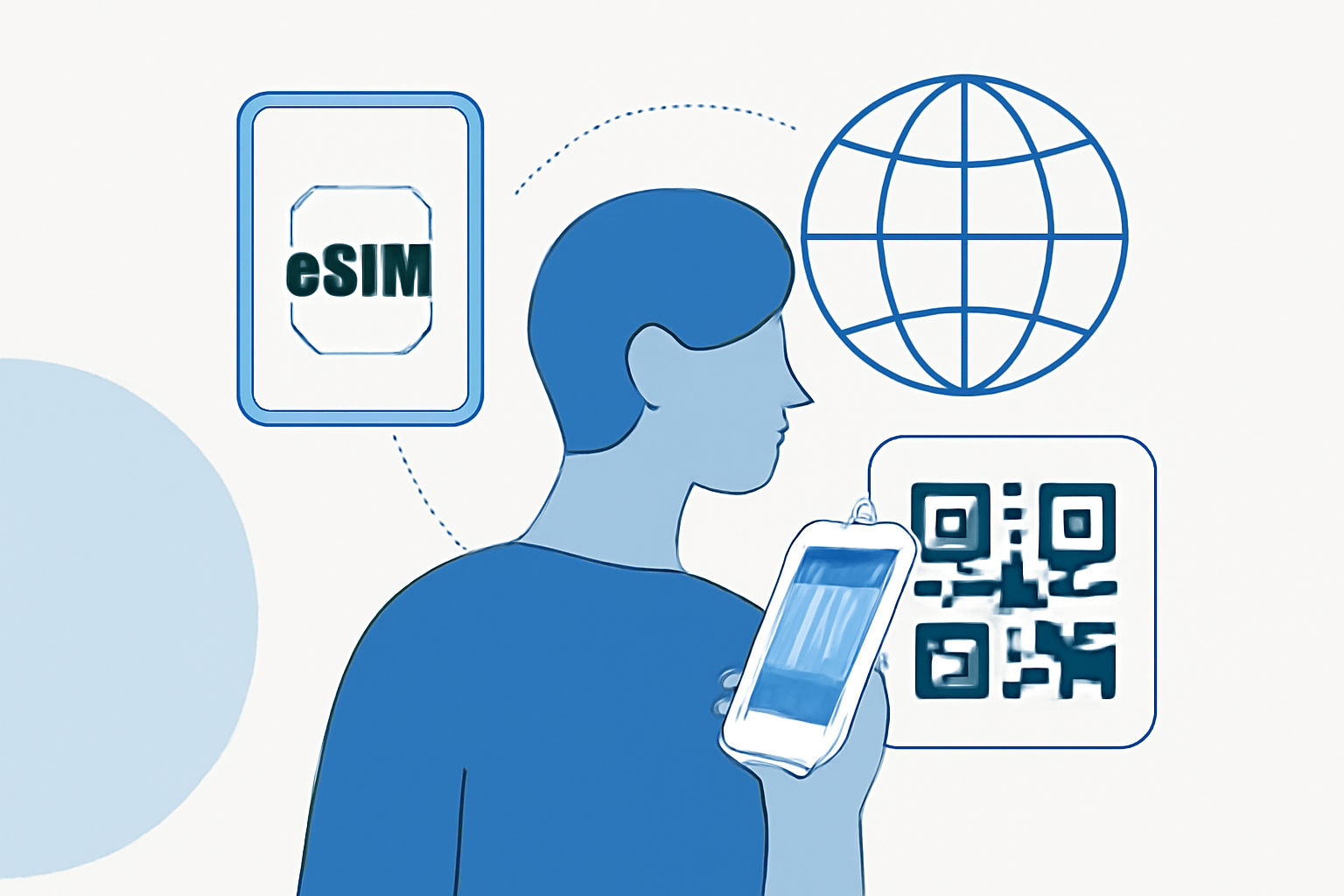
QR codes have become the technical bridge between traditional telephony identity and virtual provisioning. When you scan a QR code to activate an eSIM profile, that barcode contains the SM-DP+ server address and activation code that provision your digital identity credential without physical media exchange.
Banking systems particularly rely on mobile number stability. Wire transfer authentication, account recovery, and fraud detection all key off the assumption that your number remains constant and controlled exclusively by you. Payment platforms like Venmo and Zelle use phone numbers as primary account identifiers, creating identity persistence expectations that newer virtual number models challenge.
The GSM Association’s GSMA Intelligence data shows 67% of global digital services now use SMS-based verification as either primary or backup authentication. This dependency creates vulnerability when number portability becomes frictionless — identity theft scenarios multiply when acquiring a victim’s phone number requires only API calls rather than physical SIM swaps.
eSIM Technology Breaking Geographic Number Limitations
Embedded SIM specifications (GSMA SGP.22 for consumer eSIM) eliminate the physical constraint that historically bound mobile identity to geography. An eSIM-capable device can remotely provision profiles from carriers worldwide, downloading credentials over-the-air without shipping physical cards across borders.
This matters for identity management because geographic number assignment traditionally enforced crude location verification. A +1 number implied North American presence; +44 suggested UK location. These assumptions broke down with number porting, but eSIM accelerates the decoupling completely. I can provision a Japanese eSIM profile from my New York apartment, acquiring a +81 number that suggests Tokyo presence without ever visiting Japan.
The technical mechanism uses Remote SIM Provisioning (RSP) architecture defined in SGP.22. Your device connects to a Subscription Manager Data Preparation (SM-DP+) server via QR code parameters or activation code. The server authenticates your device’s eUICC identifier, then pushes an encrypted profile containing carrier credentials, phone number assignment, and network authentication keys.
Multiple profile storage creates parallel identity capability. Modern eSIM implementations support 5-8 stored profiles with 2 active simultaneously (varies by device). This means maintaining distinct digital identities — personal +1 number, business +44 number, travel +33 number — on one device, switching contexts without physical SIM juggling.
The identity implications extend beyond convenience. Journalists operating in restrictive regions can maintain local number presence for source communication while preserving secure home-country identity for banking and personal services. GSMA eSIM specifications technically enable this flexibility, though regulatory frameworks lag behind the technical capability.
Cross-border identity verification creates friction points. Know Your Customer (KYC) regulations typically require identity document verification matching your claimed residence. eSIM services that provision foreign numbers without corresponding residency documentation operate in regulatory gray zones — technically feasible but potentially problematic for services requiring identity proof tied to phone number origin.
Virtual Number Services for Privacy and Multi-Identity Management
Virtual number providers decouple phone numbers from traditional carrier infrastructure entirely, offering cloud-based telephony through VoIP platforms. Services layer atop IP connectivity rather than cellular networks, creating numbers that exist purely as software constructs routing through SIP trunks.
This separation from physical network infrastructure changes identity dynamics considerably. A virtual number from a VoIP provider costs $5-15 monthly versus $30-80 for traditional carrier service, reducing economic barriers to multiple identity maintenance. The technical implementation uses Session Initiation Protocol (RFC 3261) to route calls and messages through internet connectivity rather than SS7 signaling networks.
Privacy advocates value virtual numbers because they create firewall layers between permanent identity and temporary interactions. Listing a virtual number on e-commerce accounts, dating profiles, or classified ads protects your primary identity anchor from exposure. Virtual phone number solutions combine with eSIM technology to create flexible identity management systems that traditional carrier models couldn’t support.
The identity persistence question becomes critical here. Financial platforms increasingly recognize and block virtual number ranges from VoIP providers during account creation, viewing them as higher fraud risk than carrier-issued numbers. Number intelligence databases categorize ranges by assignment type — mobile network operator, fixed VoIP, non-fixed VoIP — enabling services to enforce policies requiring “real” mobile numbers.
Technical indicators expose virtual number origins. Carrier lookup APIs query the Home Location Register (HLR) or Number Portability databases, revealing whether a number terminates on cellular infrastructure or VoIP trunk. Advanced fraud detection examines SS7 metadata absent from VoIP traffic. These technical markers make truly anonymous identity maintenance difficult despite the proliferation of virtual number services.
Multi-identity management scenarios create legitimate use cases beyond privacy. Developers operating services across regions provision local numbers in each market for customer support without establishing physical carrier relationships. Small businesses appear locally present in multiple cities using virtual numbers that forward to central teams.
Regulatory Frameworks for Digital Mobile Identity Portability
Number portability regulations established the principle that subscribers own their mobile numbers independent of carrier relationships, but existing frameworks assume physical presence and identity verification remain constant. The U.S. Telecommunications Act requires carriers to support Local Number Portability (LNP) within rate centers, while European regulations mandate intra-country portability within one business day.
These regulations predate virtual and eSIM models that enable instant international provisioning. Current frameworks don’t address scenarios where users maintain simultaneous active numbers across multiple jurisdictions, creating identity verification gaps. A French citizen might hold French, German, and U.S. numbers simultaneously, each suggesting different residence claims for KYC purposes.
The Federal Communications Commission’s Customer Proprietary Network Information (CPNI) rules govern how carriers handle identity data tied to phone numbers, but virtual number providers operating as VoIP services rather than Common Carrier networks argue these regulations don’t apply. This creates identity protection inconsistency depending on technical service classification rather than user-facing functionality.
Financial Action Task Force (FATF) recommendations require identity verification for financial services, typically implemented through identity document validation matched against phone number registration. Virtual number services that don’t verify identity documentation create money laundering vulnerabilities that regulators haven’t effectively closed. The technical capability exists; regulatory frameworks haven’t caught up.
International Mobile Subscriber Identity (IMSI) numbers traditionally provided permanent identity tracking independent of phone number changes, but eSIM randomization capabilities specified in 5G standards (3GPP Release 15) allow temporary IMSI assignment that changes with profile swaps. This breaks another technical identity persistence assumption that security frameworks relied upon.
European GDPR creates “right to erasure” obligations that conflict with identity persistence requirements. When users delete accounts and request data deletion, the phone numbers previously tied to those identities enter recycling pools. New subscribers acquiring recycled numbers inherit SMS recovery access to previous owner accounts if services don’t implement strong number recycling detection. This creates a real security problem that most platforms haven’t addressed properly.
Choosing Virtual Number Solutions for Flexible Digital Presence
Selecting appropriate virtual number and eSIM solutions requires mapping technical capabilities against specific identity management requirements. Four primary factors determine solution fit: identity verification requirements, geographic coverage needs, cost structure, and integration complexity.
Identity verification depth varies dramatically across providers. Traditional carrier-backed eSIM services (T-Mobile, Vodafone, Orange) require government ID verification and address proof matching established telecommunications regulations. Pure virtual number providers split between verified (identity documentation required) and anonymous (payment-only verification) models.
For scenarios requiring high-trust identity — banking, healthcare, government services — carrier-backed solutions remain necessary. These platforms maintain identity persistence records satisfying regulatory requirements. Virtual number services work better for temporary or compartmentalized identity needs where service providers accept VoIP numbers.
Geographic coverage creates technical constraints. eSIM providers typically offer 50-150 country profiles, but number availability within those countries varies. Major markets (US, UK, Germany, France) have deep number inventory; smaller markets may offer limited area codes or only major cities. Virtual number providers often cover broader geographies but provide VoIP termination rather than native cellular service.
ETSI SIM standards continue evolving the provisioning experience, with advanced QR code implementations enabling instant profile switching and multi-device identity synchronization. The technical barrier to maintaining complex identity architectures decreases as interfaces improve.
Cost structures differ fundamentally between models. Traditional carrier eSIM plans charge monthly subscription fees ($10-80) regardless of usage. Virtual number services often offer usage-based pricing — maintaining the number costs $3-5 monthly, with per-minute rates for actual calls. For rarely-used identity maintenance numbers, virtual solutions prove more economical.
Integration requirements matter for business applications. Virtual number services typically provide REST APIs for programmatic number provisioning, SMS handling, and call routing. eSIM carriers rarely offer comparable developer access, requiring manual provisioning through consumer apps. If you’re building identity verification workflows or customer communication systems, API availability becomes decisive.
The technical reality is that strong digital identity management increasingly requires hybrid approaches — combining carrier-backed eSIM for high-trust primary identity with virtual numbers for compartmentalized secondary identities. Neither solution alone addresses all use cases emerging in the flexible identity environment.
Frequently Asked Questions
Q: Can I port my existing mobile number to an eSIM profile?
Yes, most carriers support number porting to eSIM just as they do to physical SIM cards. The process follows standard Local Number Portability procedures — you request a port from your new eSIM provider, who coordinates with your current carrier using your account information. The eSIM profile downloads with your existing number once the port completes, typically within 24 hours domestically. International porting remains complicated and often impossible due to regulatory restrictions. The technical mechanism provisions your existing number into the new eSIM profile rather than assigning a new number, maintaining identity continuity across the physical-to-embedded SIM transition.
Q: Do services treat virtual numbers differently than traditional mobile numbers for identity verification?
Absolutely. Many financial institutions, government services, and high-security platforms actively block virtual VoIP numbers during account creation and verification. They query number intelligence databases that classify ranges as mobile carrier-issued versus VoIP-terminated, rejecting the latter as higher fraud risk. Some services specifically check for number type during SMS authentication, refusing to send codes to non-mobile numbers. This creates practical limitations for using virtual numbers as primary identity anchors, though acceptance varies widely by service. Banking platforms show the strictest restrictions, while e-commerce and social platforms generally accept any number that receives SMS. The technical distinction hinges on whether the number terminates on cellular network infrastructure versus internet-based VoIP trunks.
Q: What happens to my digital identity when I switch eSIM profiles?
Your digital identity tied to a specific phone number remains active as long as that eSIM profile stays provisioned on your device, even when inactive. Switching to a different active profile changes which number receives calls and messages, but doesn’t delete the inactive profile or cancel that number. Services authenticated to your inactive number remain accessible when you switch back. However, letting an eSIM subscription lapse causes the carrier to recycle that number into their available pool, potentially assigning it to a new subscriber. This creates account recovery vulnerabilities if you’ve used that number for two-factor authentication — the new number holder can potentially intercept SMS codes. Always remove old numbers from account recovery settings before canceling eSIM subscriptions to prevent identity takeover scenarios.
Related Articles
- 2-Dimensional Bar Code Page - Specs & Standards Guide
Complete technical guide to 2D barcodes including QR Code, Data Matrix, and PDF417 specifications, implementation requirements, and practical use cases for supp
- BarCode 1 - Comprehensive Barcode Information Resources
BarCode 1 provides technical specifications, standards documentation, vendor directories, and developer tools for barcode implementation. Access symbology specs
- A Short History of Bar Code - From Invention to Today
The first barcode patent was issued in 1952 to Norman Joseph Woodland and Bernard Silver. Learn about the 20-year journey from beach-sand sketches to the first
- UPC and EAN Bar Code Guide - Implementation & Conversion
Learn the key differences between UPC and EAN barcodes, including format structures, conversion methods, and implementation requirements for retail products wor
- Code 128 Barcode - High Density Alphanumeric Standard
Code 128 barcode technical guide: character sets A/B/C, function codes, implementation examples, and why it encodes 37% more efficiently than alternatives in sh